Hi Professor Curtis-
I just finished reading ch. 7 and doing the ch. 7 homework as well.
It all seems pretty straight forward to me, so I am just going to review the main points that I found most important to my understanding of the chapter.
In this chapter, we were introduced to calculating the standard error of the mean which is found by taking the standard deviation of the sample population and dividing it by the square root of N.
We were also introduced to doing confidence intervals of 95% (1.96) and 99% (2.58) of the population.
I also learned that according to central limit theorem, as sample size increases, the sampling distribution of the mean approaches a normal distribution. So, the larger a sample size, the more normal the shape of the distribution will be (to an even bell curve shape).
Finally, I learned the difference between simple random sampling method and nonrandom sampling method- and their important relevance to the results. In a simple random sample, each member of the population has an equal chance of being selected for the sample, and each one is independent of the selection of each other. This results in a fair and accurate sample from the population. On the contrary, nonrandom sampling method does not have an accurate sample from the population, because the sample does not guarantee a random selection, so you cannot define the population that such a sample represents. Nonrandom sampling methods are thus scientifically useless.
:)
-Lisa

About Me
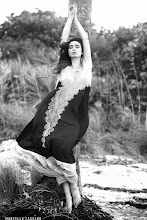
- Lisa Marie Talavera
- Lisa Marie Talavera is an artist with a knack for portraying beautiful dancing vibrant colors and energy in her pieces. Her past as a model and art director for many professional photoshoots contributes to her overall artistic vision. She puts her free natured spirit into her work with full transparency, painting beautiful artistic nudes with stunning fine realism and depth. She is a painter who is not limited by any form of construct, as she uses her whole body, hands, arms, and legs to paint some of her abstract expressionist pieces. Her background as a dancer and model can be seen in her work. She currently lives and works out of Los Angeles, California.
No comments:
Post a Comment